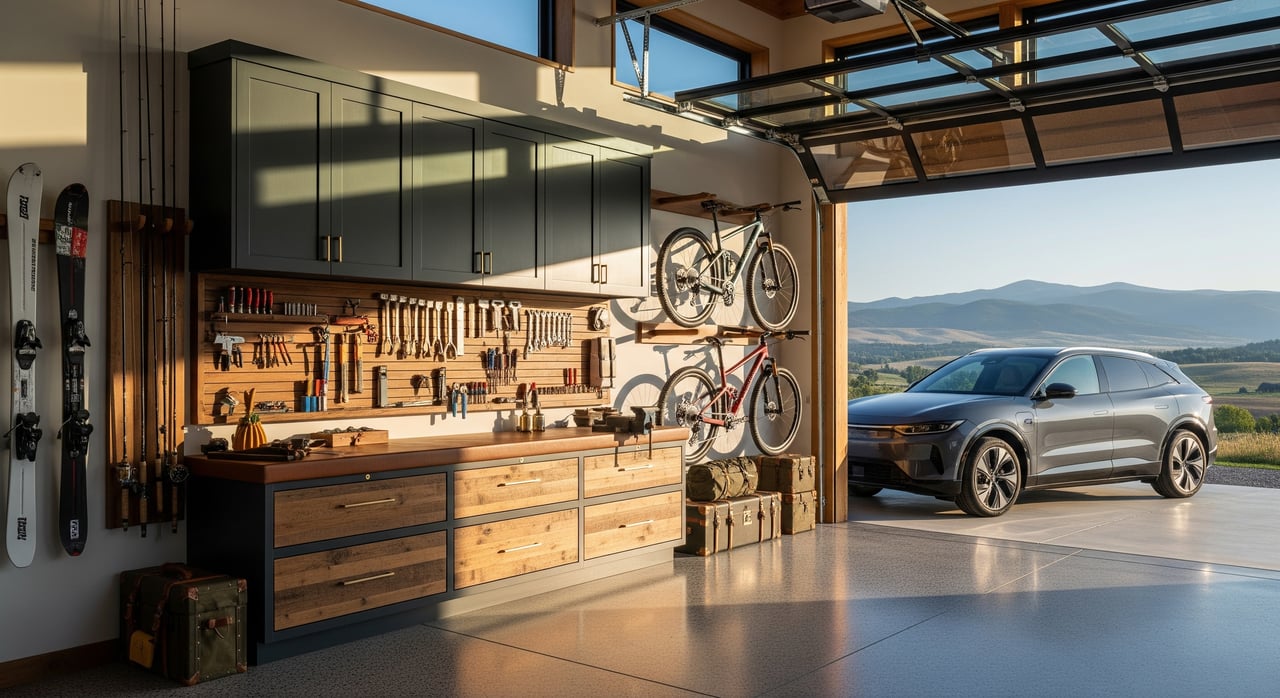
Your garage has to work harder in Manhattan. Between cold snaps, ski days at Bridger, and muddy riverside weekends, gear piles up fast and stays wet. You want storage that protects your investment and adds value when you sell. This guide walks you through smart, local choices for permits, layout, insulation, drying, EV charging, insurance, and resale. Let’s dive in.
Why Manhattan garages need to be smarter
Outdoor life drives gear
If you ski, ride, fish, or tour Yellowstone, you bring home bulky, wet gear. Proximity to local ski areas is a big driver of skis, boards, and boot storage needs, as outlined in the Bozeman ski area comparison. That reality favors vertical storage, defined drop zones, and mechanical drying.
Weather that tests your garage
Winters bring snow, ice, and freeze-thaw cycles, while summers are warm and dry. Bozeman climate normals highlight those wide swings, which also affect Manhattan and the Gallatin Valley. Plan for sealed doors, insulation, and moisture control to protect gear and vehicles in a cold climate like this (Bozeman climate overview).
Start with rules and safety
Permits in the Town of Manhattan
If you’re building new, enlarging, or finishing a garage over 200 square feet, you should expect zoning and building permits through the town. Start with the town’s Building and Zoning page and confirm details in the Manhattan code library. A quick call to the building official can save time and rework.
Electrical permits in Montana
For wiring, subpanels, or a 240V EV charger circuit, check Montana’s rules for homeowner electrical permits or hire a licensed electrician. The state outlines requirements on its electrical permits page. Always pull required permits before you open walls or run new circuits.
Insurance for garages and gear
Detached structures are often capped at a percentage of your dwelling limit, and personal property has sublimits. If you store ATVs, snowmobiles, high-end bikes, or optics, ask your insurer about scheduling items and verifying Coverage B and C limits. A quick inventory and photo record helps too (homeowners insurance guide).
Plan size and layout
Right size for vehicles and storage
A two-car garage can start around 20×20 feet, but adding 2 to 4 feet of width or depth creates room for wall systems, a bench, and safe vehicle clearance. If you drive a truck, plan wider entries and circulation paths. For practical dimensions, see this two-car garage size guide.
Smart zones that keep floors clear
- Drop zone by the door: bench, hooks, and washable boot trays.
- Vertical storage: slatwall or pegboard for daily-use gear, overhead racks for seasonal bins.
- Work corner: task lighting, GFCI outlets, and a durable surface.
- Clean vs. dirty: keep wet gear and wash-down areas away from finished walls.
Build for cold and wet
Insulation and air sealing
If you use the garage for gear care or projects, insulate to cold-climate standards and seal air leaks. Add an insulated door, weatherstripping, and consider a small heater or heat pump for frost prevention and faster drying. The DOE explains cold-climate insulation priorities and air sealing basics in its insulation and air sealing guidance.
Floors that clean up fast
Sealed concrete, epoxy, or polyaspartic coatings make salt and mud cleanup quick. Add texture near entries for traction. A gentle slope to a drain or heavy-duty mats helps manage meltwater.
Ventilation and drying that works
- Dedicated drying zone: wall boot dryers or heated racks near outlets.
- Moisture control: an exhaust fan or dehumidifier with a humidity sensor.
- Drainage: trays for boots and waders, and a spray-down area that won’t damage finishes.
Power and EV readiness
Plan circuits now
During any upgrade, check panel capacity, add a subpanel if needed, and run a dedicated 240V circuit for a future Level 2 charger. That single step makes your garage future-ready and more attractive to buyers.
Check EV charger incentives
Homeowners in eligible areas may qualify for the federal Alternative Fuel Vehicle Refueling Property credit, which can cover a portion of equipment and installation. Review the IRS rules and eligibility for Form 8911 in the EV charger tax credit guidance. Your utility may also offer programs, so ask before you install.
Storage that fits your gear
Quick wins by gear type
- Skis and boards: wall racks with padded hooks and a boot dryer near your drop zone. Local skiing makes this a high-utility upgrade (Bozeman ski area overview).
- Bikes: vertical hooks or ceiling hoists to free floor space, especially in winter.
- Waders and fishing gear: breathable hang space for waders and labeled bins for tackle.
- ATVs and sleds: clear parking lanes, battery tenders, and code-compliant fuel storage. Confirm coverage for recreational vehicles with your insurer (insurance best practices).
Costs, value, and what buyers notice
Ballpark costs and ROI
New builds vary by size and finish, but two-car garages in Montana often land in the tens of thousands. Renovating and finishing an existing garage usually costs less. At resale, practical upgrades like insulation, finished floors, storage systems, and EV readiness tend to resonate with buyers (local cost snapshot).
Showing checklist for buyers and sellers
Use this quick checklist to prep your listing or assess a garage during a showing:
- Permits: is there a record for the structure or conversion over 200 sq ft? Check with the town’s building and zoning office or the code library.
- Insulation: ask for wall and ceiling R-values and whether the door is insulated. See DOE cold-climate guidance for context.
- Electrical: is there a subpanel or a dedicated 240V circuit? Was work permitted under Montana’s electrical permits process?
- Floor and drainage: look for sealed or coated floors and adequate slope.
- Storage and drying: check for a defined drop zone, wall systems, overhead racks, and boot dryers.
- Insurance: verify detached structure limits and whether high-value gear is scheduled (coverage overview).
Friendly rebuttals to common objections
- “It feels small.” Add vertical wall systems and overhead racks to free floor space without a major addition, and consider a shallow-depth workbench.
- “It’s not EV ready.” A dedicated 240V circuit is a focused upgrade, and some homeowners may qualify for a federal tax credit on a home charger if eligible (IRS guidance).
A smarter garage in Manhattan protects your gear, keeps the house cleaner, and boosts buyer appeal. If you want help assessing which upgrades will pay off for your property and price point, reach out to Ryan Martello Real Estate for local, practical guidance.
FAQs
Do you need a permit to build or finish a garage in Manhattan, MT?
- Yes. Manhattan requires zoning and building permits for enclosed areas over 200 sq ft and for changes to footprint or height. Start with the town’s building and zoning office and the code library.
What insulation levels make sense for a Manhattan garage?
- If you use the garage as a gear room or workshop, follow cold-climate recommendations and air seal thoroughly. If unheated, prioritize sealing and insulating the wall shared with the house.
Can you get a tax credit for a home EV charger in Montana?
- Possibly. The federal credit can cover part of the charger and installation for eligible properties. Review IRS rules and confirm eligibility for your address.
Will homeowners insurance cover expensive outdoor gear stored in the garage?
- Often yes, but limits and sublimits apply. Ask about scheduling high-value items and confirm detached structure coverage limits.
What garage features do buyers in the Gallatin Valley notice most?
- Clean floors, organized wall storage, a defined drop zone with drying, good insulation, and EV-ready power are strong selling points in an outdoor-focused market.