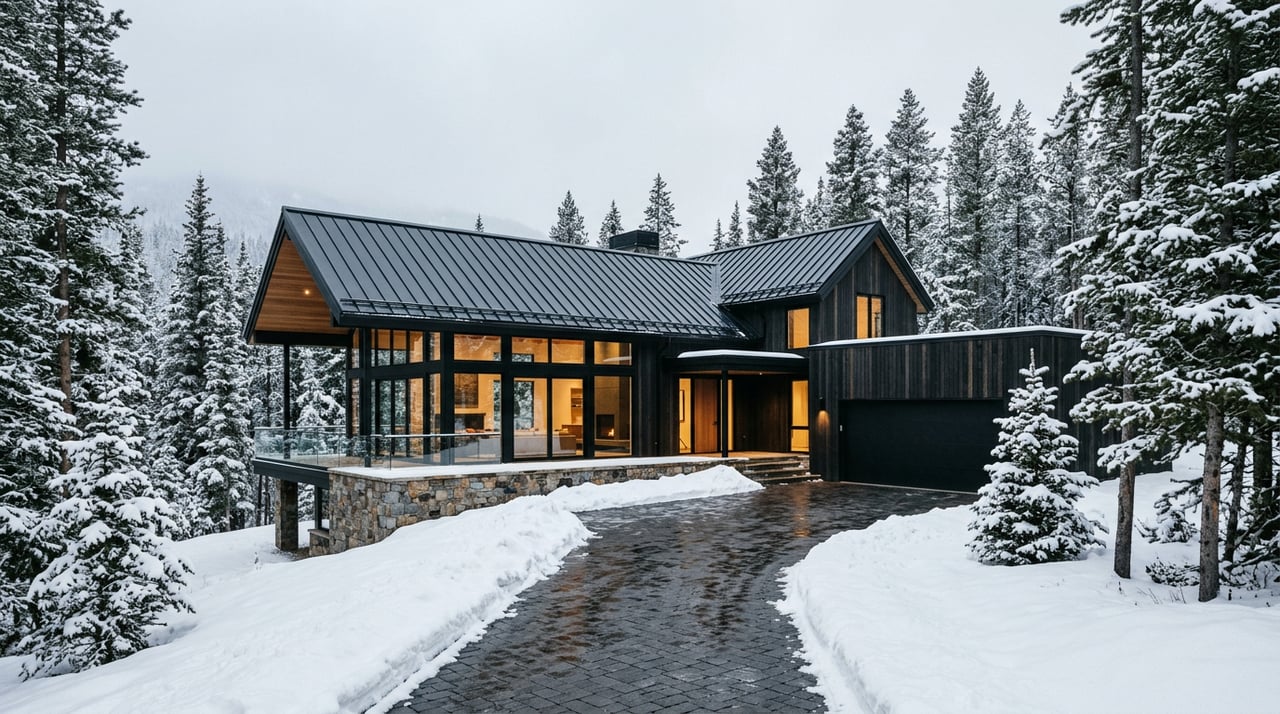
Dreaming of a mountain home tailored to your lifestyle on the Madison County side of Big Sky? The path from raw land to move-in is exciting, but the details are different here than in most places. Between county lines, septic rules, design review, and a short building season, the smartest buyers plan early and build with local context in mind. This guide walks you through each step, highlights what to verify before you buy, and gives you a clear roadmap from lot to move-in. Let’s dive in.
Why build in Big Sky
You come to Big Sky for views, privacy, and four-season access to the mountains. The community spans Gallatin and Madison counties, and many neighborhoods sit behind design guidelines that keep the mountain-modern aesthetic consistent. That mix delivers a unique setting for a custom estate. It also means your process should start with jurisdiction, utilities, and design review so you can model costs and timelines accurately.
Step 1: Pick the right lot
Finding the lot is more than picking a view. You want to verify services, constraints, and long-term feasibility before you write an offer. Start with these checks.
Verify jurisdiction and services
Big Sky is unincorporated and straddles county lines. Which county your parcel sits in will dictate land use contacts, septic oversight, and some permit steps. If the lot is in a public service area, confirm coverage with the Big Sky County Water and Sewer District by requesting a written will-serve letter that outlines capacity, fees, and timing. You can review service information on the Water Department page at the Big Sky County Water and Sewer District.
Confirm utilities and will-serve
For a high-end build, line up written confirmations from all providers. That includes water and sewer if applicable, the electric utility, and internet. Some mountain parcels require fiber extensions, wireless solutions, or a satellite backup plan. If the lot is not on public sewer, plan for on-site wastewater.
Check septic and groundwater
On-site wastewater is permitted and reviewed at the county level. In Madison County, start with the county sanitarian and the Septic System Information page. Order a soils evaluation early so you know if a conventional or advanced system is feasible. If you are exploring lots that fall in Gallatin County, know that the county has moved to tighter nutrient rules in some impaired basins. Updated policies can require Level-2 or nutrient-reducing systems, which add both up-front and ongoing O&M costs. You can review recent updates in the county’s bulletin on nitrate and health code changes.
Study access and easements
Many Big Sky roads are private. Confirm who maintains the access road, how snow removal is handled, and whether there are recorded easements or shared-driveway agreements. Construction access matters as much as everyday use. Heavy-equipment restrictions, narrow turns, or steep grades can affect your schedule and cost.
Review hazards and overlays
Big Sky’s alpine terrain is part of the appeal, but steep slopes and dense forest require smart planning. If a lot is below steep alpine faces, check current advisories from the Gallatin National Forest Avalanche Center and review hazard overlays. Start with the GNFAC daily forecast to understand seasonal patterns and use county resources or a qualified engineer to assess parcel-specific risk.
Read covenants and design rules
Many neighborhoods require Architectural Review and compliance with Covenants, Conditions and Restrictions. The Big Sky Owners Association maintains design regulations and an Architectural Committee for areas in its jurisdiction. Get the governing documents early and study materials, setbacks, height, and driveway rules. For general process insight, review the BSOA FAQs and links.
Step 2: Build your team
A strong local team is the best hedge against surprises. Engage your buyer’s agent or owner’s rep first, then line up the site and design professionals so due diligence can happen in parallel.
- Land surveyor for boundary and topography
- Civil or site engineer for grading, drainage, driveway design, and septic siting
- Architect with mountain experience and BSOA or HOA submittal history
- Geotechnical engineer for foundation design on slopes, shallow soils, or bedrock
- Septic designer and licensed installer, aligned with county requirements
- Well driller if you are on a private well
- Local general contractor with winter logistics experience
- Landscape and fire-wise contractor for defensible space and revegetation
In parts of Montana, a state building permit for a single-family home may not be required if the local jurisdiction has not adopted certified code enforcement. That makes independent construction observation by your engineer a wise safeguard where public inspections are limited.
Step 3: Permits and approvals
Permitting in Big Sky depends on where your lot sits and what services it uses. Map your steps early so design and construction flow without costly resets.
- Building permits. Montana’s Building Codes Program maintains the list of certified local jurisdictions. A state building permit is not required for a single-family dwelling unless your local government has adopted a certified program. Electrical, plumbing, and mechanical work typically still require trade permits. Confirm the exact pathway using the state’s certified jurisdiction list and the building permit FAQ. Always verify with the county.
- Septic and well. Septic permits are county-level. Work with the Madison County Sanitarian or the Gallatin City–County Health Department, depending on location. Advanced treatment may be required in impaired watersheds in Gallatin County per the county’s health code updates.
- HOA and BSOA design review. If your lot falls under BSOA or another HOA, submit architectural packages as required. Plan HOA reviews to run in parallel with county checks to keep your timeline on track. See the BSOA process overview for orientation.
- Trade permits. Even where a full building permit is not required, expect to pull electrical, plumbing, and mechanical permits. Coordinate with your GC and trades to keep inspections timely.
Step 4: Design for the mountains
At Big Sky elevations, snow and wind shape the structural plan. Roof geometry, load paths, and drainage all matter. Confirm design loads with your structural engineer and reference state guidance for local code contexts via the Building Codes Program’s certified government information.
Wildfire risk is another critical factor. Big Sky participates in wildfire planning and WUI mapping. Use ignition-resistant materials, Class A roofs, and a landscape plan that creates defensible space and aligns with HOA or BSOA guidelines. Gallatin County’s Community Wildfire Protection Plan update provides helpful context for home hardening and preparedness; learn more through the Ready Gallatin update hub.
For steep or alpine-adjacent lots, ask your engineer about avalanche-aware siting that keeps the home out of runout if possible. Berms or deflection structures may be feasible, but they add complexity and cost and are not suitable for every site. Monitor seasonal trends through the GNFAC forecast and rely on parcel-specific engineering.
Step 5: Budget and finance
Land price is only part of the equation. In mountain markets like Big Sky, site work and infrastructure can drive a large share of total cost. Model early so you can right-size design, contingencies, and financing.
Key cost drivers to plan for:
- Excavation, rock blasting, retaining walls, and long or steep driveways
- Advanced septic in impaired watersheds where required, plus O&M contracts tied to permit conditions
- Winter access, temporary roads, and snow management during construction
- Specialty foundations on slopes or shallow bedrock
- Insurance in WUI or high-hazard areas
Local housing analyses show tight inventory and upward pricing pressure in Big Sky, with significant premiums for resort-proximate and view properties. For context on affordability and local efforts, review resources from the Big Sky Housing Trust. Use conservative assumptions for build cost per square foot, include a 10 to 20 percent contingency for mountain logistics, and align construction loan terms with your GC’s draw schedule.
Step 6: Timeline and seasonality
Southwest Montana has a short exterior building window. Heavy site work, foundations, utilities, and framing typically happen late spring through early fall. Winter work is possible but often adds cost for snow hauling, heating, and staging. For timeline planning, local estimates often look like this:
- Design and pre-permit: 1 to 3 months once you have surveys and site studies
- Permitting and final design: 2 to 12 weeks, depending on county workload and revisions
- Construction: 8 to 18 months for custom homes, with remote or complex sites trending longer
Add months for selections, supply lead times, winter slowdowns, and commissioning. Your team can help sequence excavation and concrete early in the season, then rotate to interior trades as weather closes in.
Lot to move-in checklist
Use this as your at-a-glance roadmap. Tackle early items before you go under contract when possible.
Pre-offer
- Confirm county, HOA or BSOA jurisdiction, and service districts
- Request will-serve letters from water/sewer and power providers
- Pull recorded CC&Rs and design regulations
- Order survey and schedule septic soils and geotech evaluations
Contract to schematic design
- Engage architect, civil, and geotech
- Begin HOA or BSOA pre-submittal if required
- Map driveway, drainage, and likely septic locations
Permits and final design
- Submit septic permit applications with stamped designs
- Confirm building permit or exemption path with the state’s jurisdiction list and county staff
- Pull trade permits and align inspection schedule with your GC
Construction to closeout
- Stage materials to match the weather window
- Schedule independent construction observation where public inspections are limited
- Complete final approvals, septic O&M contracts if required, and punch list
How your agent adds value
A local advisor compresses your learning curve and reduces risk. Here is how a Big Sky-focused agent supports you from the start:
- Early triage. Identify the county, service districts, and HOA or BSOA obligations. Flag known overlays like avalanche runout, floodplains, and wetlands so you avoid late-stage design changes.
- Pre-offer due diligence. Coordinate surveys, soils and geotech, septic feasibility, and will-serve letters. Connect you with architects, engineers, and builders who work this terrain.
- Permit pathway clarity. Explain whether your parcel requires state plan review, county permits, or primarily trade permits. The state’s permit FAQ and certified jurisdictions are key references.
- Project coordination. Recommend vetted local contractors, septic installers, well drillers, and inspectors where applicable. Local networks shorten timelines and help you avoid redesigns.
Ready to build your plan from lot to move-in with clear next steps and a trusted local partner? Let’s map your path and assemble your team so you can design with confidence and enjoy the process.
If you are considering a custom home or land purchase in Big Sky’s Madison County, reach out to schedule a planning session with Ryan Martello Real Estate. We will help you verify the path, connect you with the right experts, and move from vision to groundbreaking on your timeline.
FAQs
What makes building in Big Sky different from other markets?
- Big Sky spans two counties and includes HOA or BSOA design review in many neighborhoods, septic oversight is county-based, and Montana’s permit framework can exempt some single-family homes from state building permits depending on local adoption. Plan for a short exterior build season and mountain-specific design for snow, wind, wildfire, and potential avalanche exposure.
How do I know if my Big Sky lot has public sewer or needs septic?
- Start with a will-serve inquiry to the Big Sky County Water and Sewer District to confirm service. If the parcel is outside the district, coordinate a soils evaluation and consult county health departments, including Madison County’s septic resources.
Do I always need a building permit for a custom home in Big Sky?
- Not always. In Montana, a state building permit for a single-family dwelling is only required where the local government has adopted a certified code program. Electrical, plumbing, and mechanical permits typically still apply. Confirm your parcel’s exact pathway using the state’s certified jurisdiction list and permit FAQ, plus your county.
How do wildfire and avalanche risks affect design and insurance?
- Expect to use ignition-resistant materials, a Class A roof, and defensible-space landscaping per local guidance. Review community wildfire planning resources via Ready Gallatin. For alpine-adjacent sites, get an avalanche-aware siting review and monitor GNFAC forecasts. Underwriters may adjust premiums or require mitigation in higher-risk zones.
What timeline should I expect from offer to move-in?
- A common range is 1 to 3 months for design and pre-permits, 2 to 12 weeks for permitting and final design, and 8 to 18 months for construction, with remote or complex sites taking longer. Add time for winter slowdowns, finishes, and final commissioning.
Which costs most often surprise buyers building in Big Sky?
- Site work on steep or rocky ground, advanced septic where required in impaired basins per Gallatin County updates, winter construction logistics, and specialty foundations. Budget a 10 to 20 percent contingency for mountain conditions.